
Chinese official touts anti-scam crackdowns, admits battle far from over
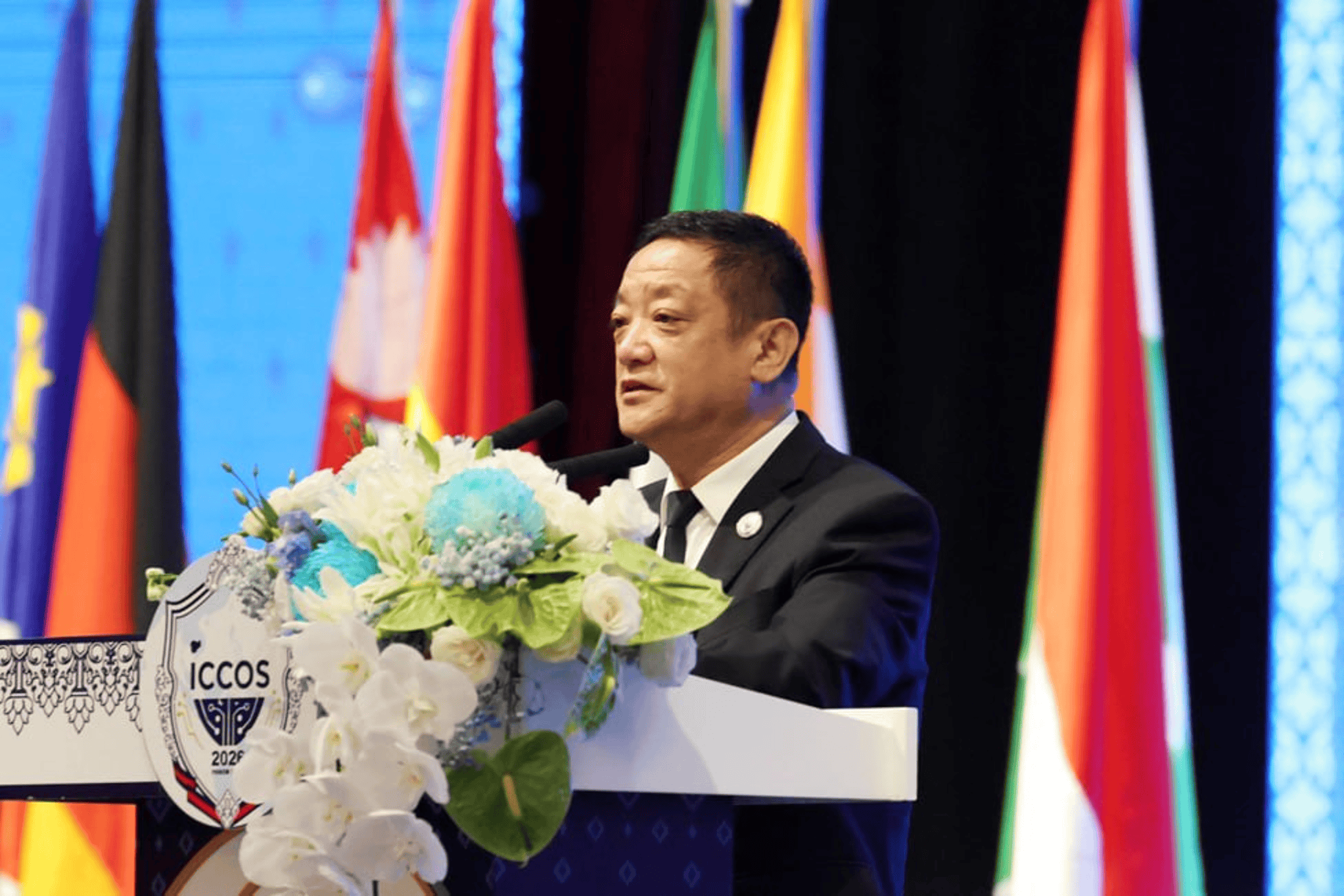
A senior Chinese security official has acknowledged that his country remains one of the world's biggest targets of telecom and online fraud, even as Beijing steps up enforcement at home and abroad.
Speaking at the International Conference on Combating Online Scams in Phnom Penh, Vice Minister of Public Security Yang Weilin said hundreds of thousands of Chinese citizens are defrauded each year, with losses running into the tens of billions of yuan.
Zero tolerance, at home and abroad
Yang said China has long treated fraud as a priority, combining domestic sweeps with international cooperation. "China has always insisted on zero tolerance for fraud crimes," he said, describing regular crackdowns aimed at removing the conditions that allow such crime to take root.
Abroad, he said, Beijing has leaned on bilateral and multilateral channels to help dismantle scam compounds and hubs, arguing that the fraud and gambling landscape across Southeast Asia has improved markedly.
High-profile arrests
Yang pointed to several prominent figures detained through cooperation with Cambodia, describing them as financiers and organisers behind gambling and fraud operations:
- Chen Zhi, founder of Prince Group, was arrested and sent to China in January over "pig-butchering" scams and other illegal business activities. US authorities seized an estimated $14–15 billion in bitcoin linked to the network.
- Li Xiong, former chairman of Cambodia-based financial conglomerate Huione Group, which is reportedly connected to Prince Group, was arrested and extradited in April.
- Liu Ren, who ran Jinbei Group, a business that shifted from online gambling into scam operations, was arrested and deported in June.
Regional cooperation
Yang highlighted joint operations with neighbouring countries, including work with Myanmar that led to the dismantling of the so-called "Four Major Families" criminal networks in the country's north.
He also cited the extradition of She Zhijiang, carried out together with Thai police, as evidence of a growing deterrent. Beyond the region, he said China cooperates with partners across Asia, Africa, Europe and the Americas, naming the United Arab Emirates, Vietnam, Laos, the Philippines, Malaysia, Indonesia, Pakistan, Sri Lanka, Madagascar, Kyrgyzstan, the United States and Spain.
A long road ahead
Despite the progress, Yang stressed that fraud has not been eliminated. Criminal networks continue to move across borders, black and gray industries adapt faster than crackdowns, and the overall picture remains complicated.
He urged governments to work together and keep politics out of the fight. "We must never politicise the fight against transnational crime, still less engage in stigmatisation or confrontation," he said.
Yang also praised Cambodia's own efforts, noting stronger legislation, tougher enforcement, action against corruption and deeper international cooperation. He said the country has run sustained operations against fraud, cleared large-scale scam and gambling compounds, and repatriated tens of thousands of suspects — results he said are visible to the world.